
Taylor County Kentucky Civil Court Records
Taylor County civil court records document legal proceedings filed within the 47th Judicial Circuit of Kentucky. The Circuit Court Clerk maintains these official case files at the courthouse in Campbellsville, providing public access to civil litigation documents, court orders, and judgment records. Residents and legal professionals can request copies of case files by contacting the clerk's office directly or accessing the Kentucky CourtNet online system. Understanding how to navigate these records helps researchers locate specific cases involving contract disputes, property matters, personal injury claims, and other civil actions that have been adjudicated in Taylor County courts.
Taylor County Quick Facts
Taylor County Circuit Court Clerk
The Taylor County Circuit Court Clerk is Susie Skaggs, who serves as the custodian of all civil court records for the county. The clerk's office is located at the Taylor County Courthouse at 203 North Court Street in Campbellsville. This office maintains records for civil cases involving disputes over $5,000, as well as family court matters and contested probate proceedings. The office operates Monday through Friday from 8:00 a.m. to 4:00 p.m., providing assistance to attorneys, litigants, and members of the public who need to access court documents.
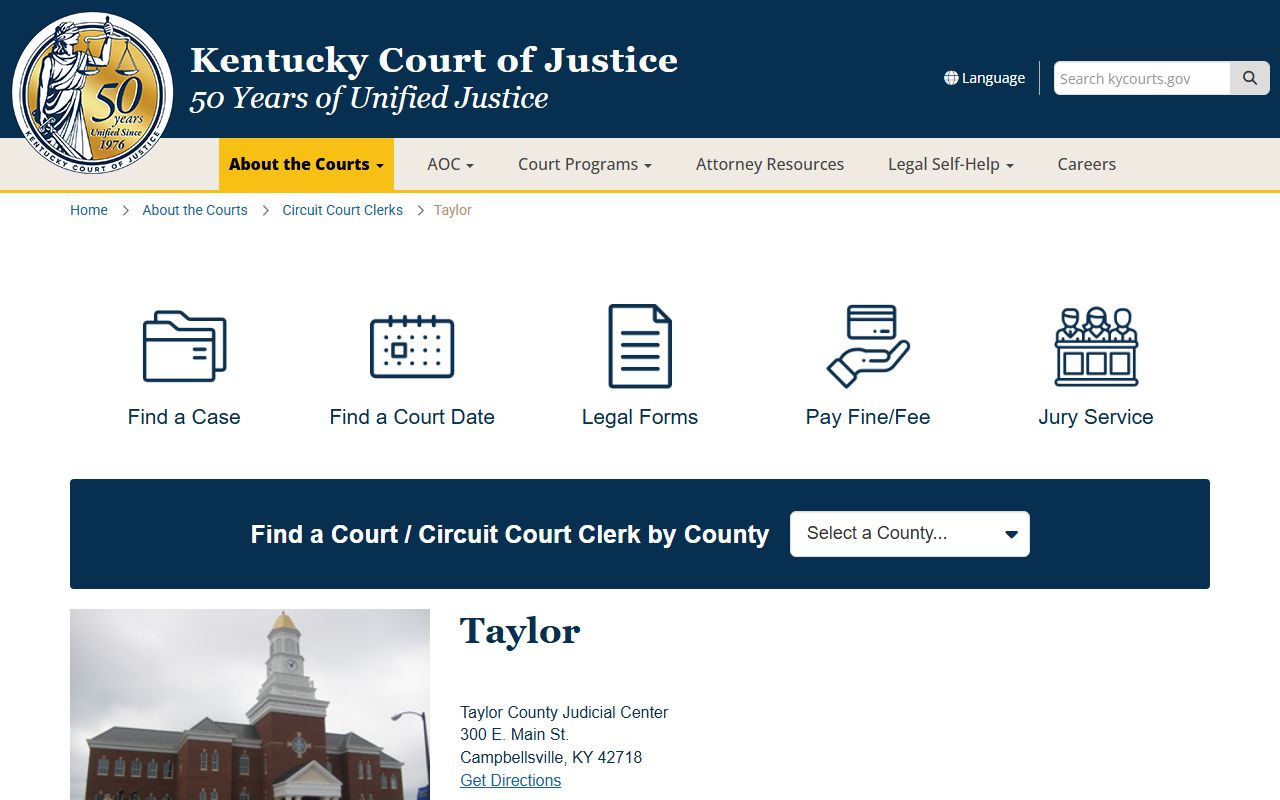
Visit the official Kentucky Court of Justice page for Taylor County to learn more about court services.
The Circuit Court Clerk's office can be reached by telephone at 270-465-6671 for questions about case availability and record request procedures. When requesting copies of court documents, providing the specific case number helps staff locate files more efficiently. The office accepts requests for certified copies of judgments, court orders, and other filings. For cases filed within the past 15 years, records are typically available on-site. Older cases may be stored at the State Records Center, requiring advance notice for retrieval.
Accessing Civil Court Records in Taylor County
Taylor County civil court records can be accessed through several methods depending on the age of the case and the type of information needed. Current cases filed within the last 15 years are maintained at the Circuit Court Clerk's office in Campbellsville. These records include complaints, motions, court orders, judgments, and other documents filed in civil actions. The public may review these files during normal business hours by visiting the clerk's office in person. Staff can assist with locating specific cases when provided with party names, case numbers, or approximate filing dates.
For cases between 15 and 35 years old, records are stored at the Kentucky State Records Center. Requestors must submit a records request form to state.records@ky.gov or call 502-564-3617 for assistance. Cases older than 35 years may be archived at the Kentucky Department for Libraries and Archives. The Kentucky CourtNet 2.0 system provides online access to limited docket information for recent cases, though full document access requires visiting the clerk's office or obtaining certified copies through official channels.
Online Search Options for Taylor County Court Records
The Kentucky Court of Justice provides online access to court records through the CourtNet 2.0 system. This portal allows users to search for basic case information including party names, case numbers, and hearing schedules for Taylor County civil matters. Visit CourtNet 2.0 to begin your search. The public access version provides limited docket information at no cost, while attorneys and authorized users can subscribe for more comprehensive access to case details and document images.
When searching online, using specific search criteria yields the best results. Enter complete party names, exact case numbers when available, and narrow date ranges to filter results effectively. The online system displays case status, upcoming hearings, and basic filing information. However, actual document copies still require a visit to the clerk's office or a written request for certified copies. For self-represented litigants and legal researchers, the online docket provides a useful starting point before making an in-person records request.
Types of Civil Cases in Taylor County
Taylor County Circuit Court handles various types of civil litigation matters. Cases involving monetary disputes over $5,000 fall under the circuit court's jurisdiction, including breach of contract claims, debt collection actions, and property damage lawsuits. The court also hears real property disputes such as quiet title actions, boundary disagreements, and foreclosure proceedings. Family court matters handled in Taylor County include divorce cases, child custody disputes, adoption proceedings, and domestic violence protective orders. These cases generate extensive documentation that becomes part of the permanent court record.
Probate matters involving estates, wills, and guardianships are also filed in circuit court when contested. Small claims cases involving $2,500 or less are handled by the District Court rather than Circuit Court. Understanding which court division handled a specific case helps researchers locate the correct records. Civil cases typically generate complaints, answers, motions, discovery documents, court orders, and final judgments. Each of these document types may be requested individually or as part of a complete case file copy.
In-Person Record Requests in Taylor County
Visiting the Taylor County Circuit Court Clerk's office in person remains the most reliable method for obtaining complete court records. The courthouse is conveniently located in downtown Campbellsville at 203 North Court Street. Visitors should bring specific case information including party names, case numbers, and approximate filing dates to expedite their requests. The clerk's office provides public computer terminals for searching case indexes and viewing basic case information before requesting document copies.
When requesting copies, specify whether you need plain copies or certified copies, as fees differ between these options. Certified copies bear the official court seal and are required for legal proceedings, property transactions, and other official purposes. Payment methods typically include cash, check, or money order made payable to the Circuit Court Clerk. Credit card acceptance varies by county, so calling ahead to 270-465-6671 to confirm payment options is recommended. Allow sufficient time for staff to retrieve files from storage, especially for older cases that may be archived off-site.
Legal Resources and Assistance
Individuals researching Taylor County civil court records may benefit from various legal resources available to the public. The Kentucky Court of Justice website provides standard legal forms for common civil actions including eviction proceedings, small claims complaints, and family court matters. These forms help self-represented litigants understand document formatting and filing requirements. The Legal Self-Help section of the Kentucky Court website offers guidance on court procedures, though it does not constitute legal advice.
For complex legal matters or cases requiring interpretation of court records, consulting with a licensed Kentucky attorney is advisable. Legal aid organizations serve eligible low-income residents throughout Kentucky, providing assistance with civil matters including housing, family law, and consumer protection issues. The Taylor County Bar Association and local law libraries may offer additional research resources for historical cases. Remember that court clerks can provide procedural information but cannot offer legal advice or interpret court documents for litigants.
Nearby Counties with Civil Court Records
Researchers may need to consult civil court records from neighboring counties when cases involve multiple jurisdictions or when parties have relocated. Taylor County is surrounded by several Kentucky counties with their own circuit court systems. Each county maintains separate records at their respective courthouses, with clerks who can assist with record requests following similar procedures. Understanding the geographic relationships between these counties helps researchers determine where relevant case files may be located.
For cases involving parties from adjacent areas or legal matters that cross county boundaries, checking records in these neighboring jurisdictions may provide additional relevant information. The circuit court clerks in these counties maintain similar civil record systems and offer comparable access procedures for public inspection and copy requests.